“Every investor starts somewhere. Opening a Demat account is simply where your journey begins.”
If you’ve finally decided to step into the world of investing—first of all, congratulations!
Whether you’ve been watching stock market videos, hearing friends discuss their latest investments, or simply wondering what all the buzz around shares and mutual funds is about, you’ve already taken the first step: curiosity.
The next one is opening a Demat account.
Now, don’t let the name intimidate you. Despite sounding technical, opening a Demat account today is almost as simple as signing up for a new banking app. Most brokers let you complete the entire process online, often in less time than it takes to finish your morning coffee. Let’s walk through it together.
What Exactly Is a Demat Account?
Imagine buying a book online.
You place the order, make the payment, and instead of receiving a paper receipt forever, everything is stored digitally in your account.
A Demat account works in a similar way.
When you buy shares, ETFs, bonds, or other eligible securities, they don’t arrive as physical certificates anymore. Instead, they’re safely stored in your Demat account in electronic form.
Think of it as your digital locker for investments.
Every share you own lives there securely until you decide to sell it.
Do You Really Need One?
In short—yes.
If you want to invest in shares listed on Indian stock exchanges, a Demat account isn’t optional; it’s essential.
Without one, there’s simply nowhere for your purchased securities to be stored.
The good news? You only need to open it once.
After that, you’re ready to start building your investment portfolio whenever you feel comfortable.
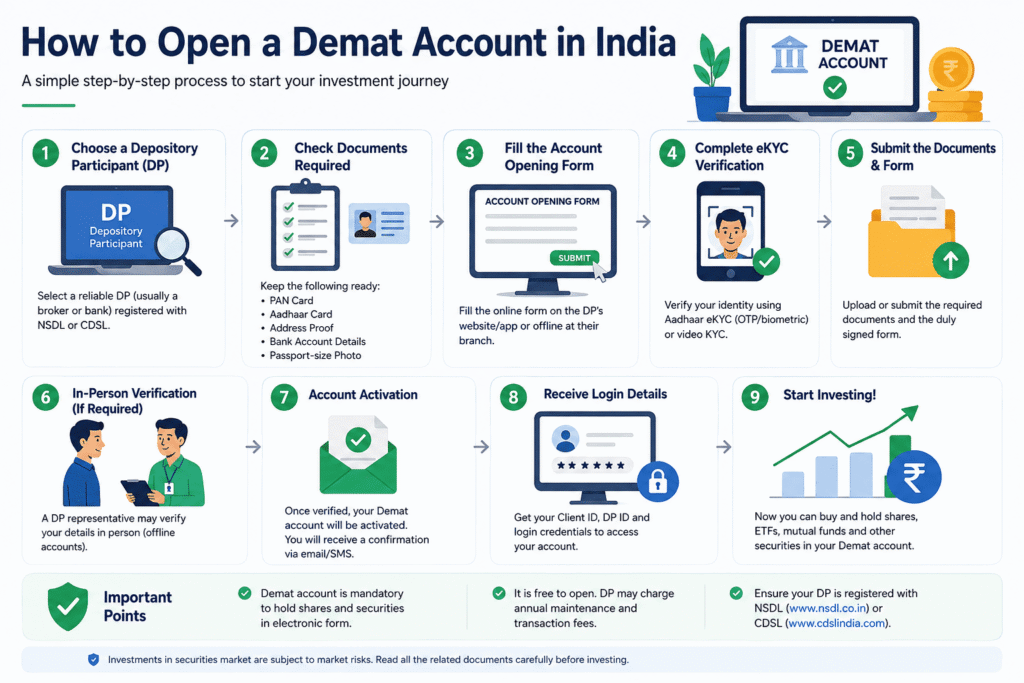
Before You Begin, Keep These Documents Ready
The application process is much smoother when everything is within reach.
Here’s what you’ll generally need:
- PAN Card (mandatory)
- Aadhaar Card or another valid address proof
- Active mobile number
- Email address
- Bank account details
- A recent passport-size photograph (if requested)
If you plan to trade in derivatives such as Futures and Options later, your broker may also ask for proof of income.
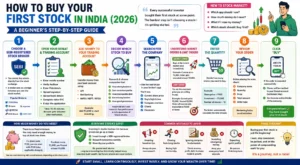
Step 1: Choose a SEBI-Registered Broker
This is probably the most important decision you’ll make before opening your account.
Your broker acts as the bridge between you and the stock market.
While choosing one, don’t focus only on advertisements or the promise of “zero brokerage.”
Instead, ask yourself:
- Is the broker registered with SEBI?
- Are the charges transparent?
- Is the mobile app easy to use?
- Does it provide good customer support?
- Will it still feel reliable a few years from now?
A good investing experience often starts with choosing the right platform.
Step 2: Fill in Your Basic Details
Once you’ve selected a broker, visit their website or download their app.
You’ll be asked to enter basic information such as:
- Your name
- PAN number
- Aadhaar details
- Mobile number
- Email address
An OTP is usually sent to verify your identity.
Nothing complicated here.
Step 3: Complete Your KYC
You’ve probably completed KYC for your bank account or mutual fund investments before.
The process is quite similar.
Simply upload your documents and let the broker verify your identity and address.
Most brokers complete this digitally, so there’s rarely any paperwork involved.
Step 4: Verify Yourself
To ensure the account is genuinely being opened by you, brokers conduct a quick identity verification.
This usually involves:
- A live selfie
- A short video
- Or a brief Video KYC session
It generally takes just a few minutes.
Step 5: Sign Digitally
No printers.
No scanners.
No courier.
Simply review the application and sign it digitally using Aadhaar-based eSign or another approved method.
Technology has certainly made investing much easier than it used to be.
Step 6: You’re Ready!
Once your application is verified and approved, you’ll receive:
- Your Demat account number
- Client ID
- Login credentials
- Trading account details (if you’ve opened one alongside your Demat account)
And that’s it.
Your investing journey officially begins.
How Long Does It Take?
If your documents are accurate, many brokers can open your account within a few hours.
In some cases, it may take up to one business day.
Either way, the waiting time is usually much shorter than most beginners expect.
Are There Any Charges?
Yes—but they vary from broker to broker.
Common charges include:
| Charge | What It Means |
| Account Opening Fee | Some brokers charge it, while many offer free account opening. |
| Annual Maintenance Charge (AMC) | A yearly fee for maintaining your Demat account. |
| Brokerage | Paid whenever you buy or sell securities through your trading account. |
| DP Charges | Applicable when securities are debited from your Demat account. |
Always check the broker’s latest pricing before signing up. A little comparison today can save you money over time.
A Few Things Beginners Often Overlook
Opening the account is easy.
Opening the right account takes a little more thought.
Here are a few simple tips:
✔ Read the fee structure carefully.
✔ Enable two-factor authentication.
✔ Add a nominee to your account.
✔ Keep your mobile number and email updated.
✔ Don’t choose a broker only because someone on social media recommended it.
Your investing journey deserves a little homework.
Frequently Asked Questions
Can I open a Demat account online?
Absolutely. Most brokers now offer a fully digital account opening process.
Is PAN mandatory?
Yes. A valid PAN card is required to open a Demat account in India.
Can I have more than one Demat account?
Yes. You can maintain multiple Demat accounts with different Depository Participants, provided you follow the applicable regulations.
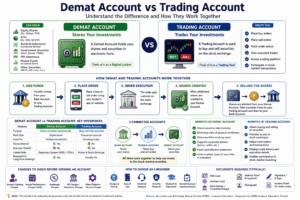
Do I need a Trading Account too? If you want to buy and sell shares on the stock exchange, you’ll typically need both a Trading Account and a Demat Account. One helps you execute trades, while the other stores your investments.
Conclusion
Opening a Demat account isn’t the finish line—it’s simply the starting point.
The real journey begins when you start learning, investing consistently, and making informed financial decisions.
Take your time.
Ask questions.
Read before you invest.
Remember, successful investing isn’t about making the fastest move—it’s about making informed ones.
Your first investment doesn’t need to be perfect.
It just needs to be the beginning.
Sources
- Securities and Exchange Board of India (SEBI)
- National Securities Depository Limited (NSDL)
- Central Depository Services (India) Limited (CDSL)
- Investor education material published by the depositories and SEBI
Comment if you have any query.